
The Request Timed Out. Should You Send It Again?
October 18, 2026
Structured Data Explains Entities—It Does Not Buy a Rich Result
October 18, 2026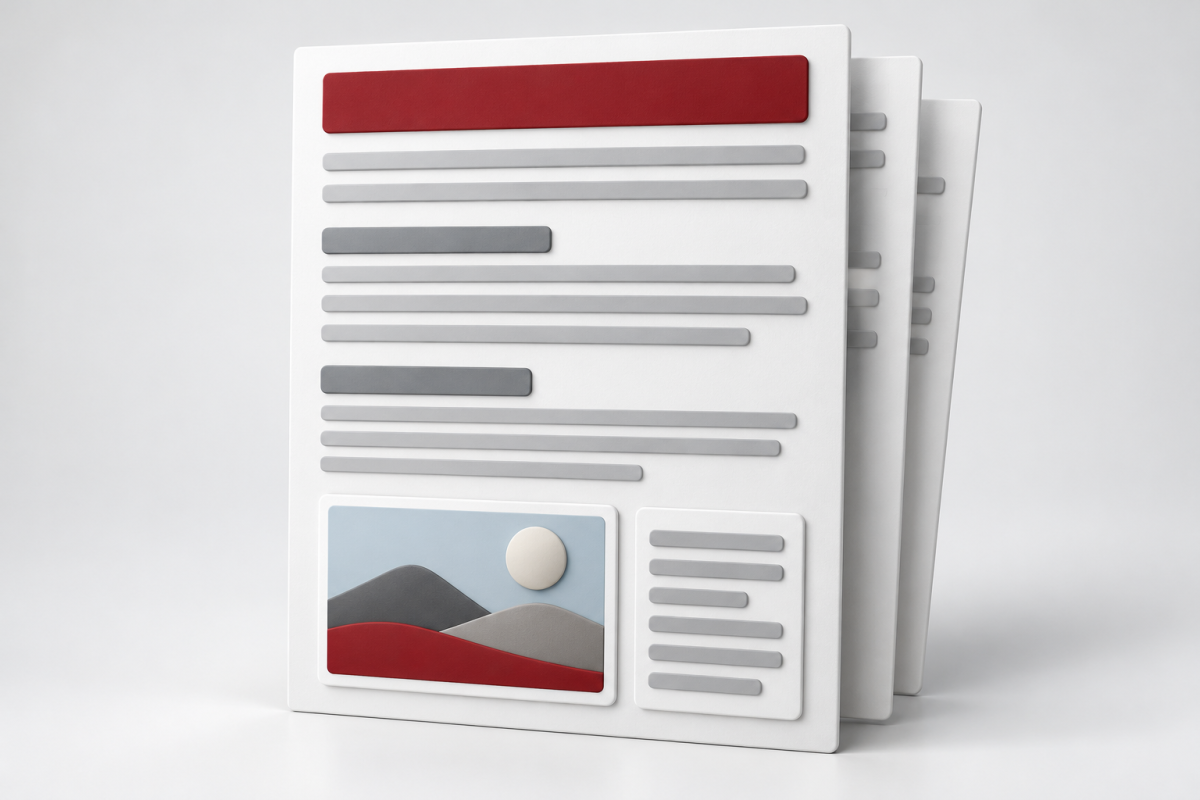
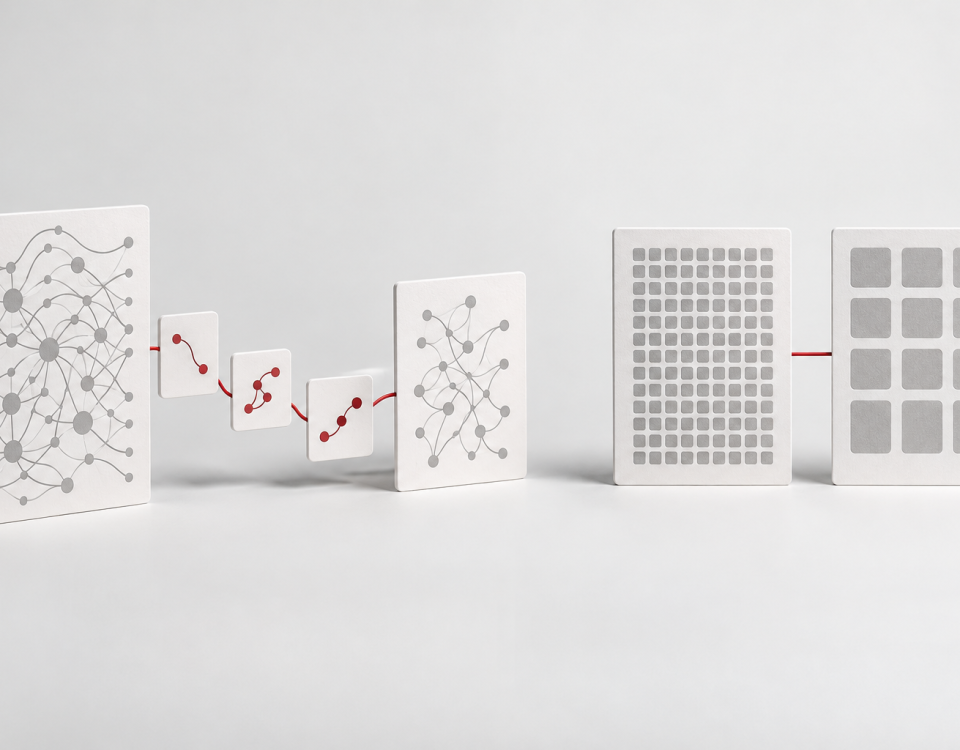
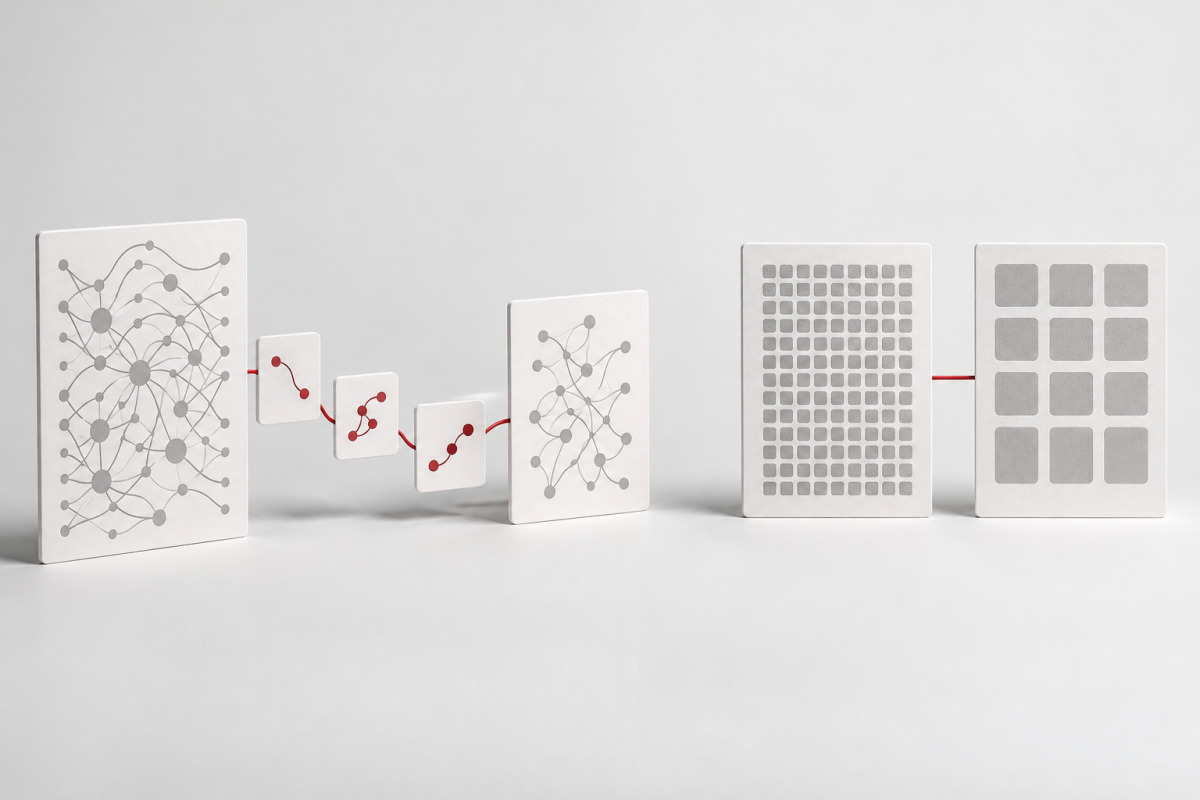
Different page elements serve different purposes. AI-generated conceptual illustration; no real page or search result shown.
A reader arrives with a question. Before reading the whole page, they need to recognize its subject, find the relevant section and understand any image that carries information. A title, a description, a heading and an image alternative help at different points. Treating them as interchangeable labels leaves those needs unanswered.
Begin with a question the page can answer
Imagine an invented guide for editors checking sources in an AI-generated draft. Its first working title is “Smarter Content,” and its sections are called “Overview,” “More” and “Next.” The intended question is much more specific: how do I check whether a source actually supports a statement? All page wording and images below are illustrative, not an inspected page or search result.
Keyword research investigates the language and questions an audience uses. Google’s SEO Starter Guide recommends useful, original, readable content and considering different readers’ vocabulary. The investigation should inform what the page explains; inserting every phrasing variation is not a substitute for answering the question.
For our fictional guide, “check sources in an AI draft” is a proposed description of the task. We have not measured its search volume or established that it is anyone’s actual query. The editorial decision is to explain tracing a statement to its source, identifying a mismatch and deciding what needs human review.
Separate the visible title from the search title
The visible main heading tells someone already on the page what it covers. The HTML title element supplies another page title. A title link is the linked title shown in a search result. Google’s title-link guidance describes automated generation using sources including the title element, visible main title and headings; supplied wording is an input, not an exact-display promise.
Google recommends descriptive, concise title text and a clear main title. It cautions against keyword repetition and vague or boilerplate wording. Displayed title links can be truncated to fit the available width, so a universal character-count formula cannot guarantee how one will appear.
| Element in the fictional guide | Proposed wording or role |
|---|---|
| Visible main heading, H1 | How to Check Sources in an AI Draft |
| Title element | Check Sources in an AI Draft | Editorial Guide |
| Description | Learn how to trace statements in an AI draft to supporting sources, flag gaps and decide what needs review. |
| Section heading, H2 | Find the original source |
| Subsection heading, H3 | When a source does not support the statement |
The table proposes related wording for related jobs. The heading addresses the reader directly; the title element identifies the guide succinctly; the description summarizes its scope. None adds a promise that the page cannot deliver, such as proving every AI-generated statement correct. The proposed phrases describe the same guide rather than competing topics.
Make the description an accurate invitation
A meta description supplies a short page summary. Google’s snippet guidance explains that snippets are generated primarily from page content; the description may be used when it offers a better summary. Different searches may produce different snippets for the same page. Write an accurate, page-specific description without treating it as a guaranteed search-result caption.
For the invented guide, the proposed summary names its three tasks: trace, flag and review. If the guide has no comparison of tools, its description should not advertise one. If the wording changes later, the useful check is whether the summary still matches the material, not whether it fills an arbitrary quota.
Use heading ranks to express relationships
Heading hierarchy organizes sections and subsections. W3C WAI’s heading tutorial explains that headings communicate structure and support in-page navigation, including through assistive technologies. Its guidance nests sections by rank and advises avoiding skipped ranks when opening subsections. Choose the semantic level for the relationship; visual size can be styled separately.
In our outline, “Find the original source” is a main section. “When a source does not support the statement” is a subsection within it. A later section about recording the reviewer’s decision returns to H2. Making that subsection visually bold would not, on its own, establish the same heading relationship.
Describe what the image contributes here
Image alt text conveys relevant information or function. W3C WAI’s images tutorial distinguishes informative, decorative and functional images. An informative image needs an alternative conveying its essential information. A purely decorative image can use an empty alternative, alt=””. An image serving as a link or button needs an alternative that describes its purpose.
Suppose our guide contains a simple illustration connecting a draft statement to a supporting source passage. Its proposed alternative is “A draft statement is linked to the passage that supports it.” A decorative divider carries no comparable information. If an image alone links to a review checklist, its alternative would instead identify opening that checklist.
The right alternative depends on the image’s actual content and use. A complex diagram may also need a complete text explanation of its information. A filename, a keyword list or a source credit does not necessarily supply that information. These decisions do not, by themselves, establish that an entire page conforms to accessibility requirements.
Check whether all the elements describe the same page
These choices are part of on-page SEO: improving the page’s content, organization and descriptive elements so its purpose is understandable. Google’s starter guidance offers no automatic first-place ranking from following its advice. Clear wording remains useful without turning it into a ranking formula or claiming a traffic increase.
From a Search Question to a Result: What SEO Can Actually Influence places these choices in the wider reader journey. Found, Crawled, Indexed: Why These Are Different States covers the separate discovery and indexing questions. For our fictional guide, the immediate editorial test is simpler: do the title, description, section structure and image alternatives help someone understand the question the page actually answers?