
How Coding Agents Work: Context Sandboxes Tests and Recovery
October 14, 2026
Continual Improvement for AI Agents: Turn Failures Into Verified Capability
October 14, 2026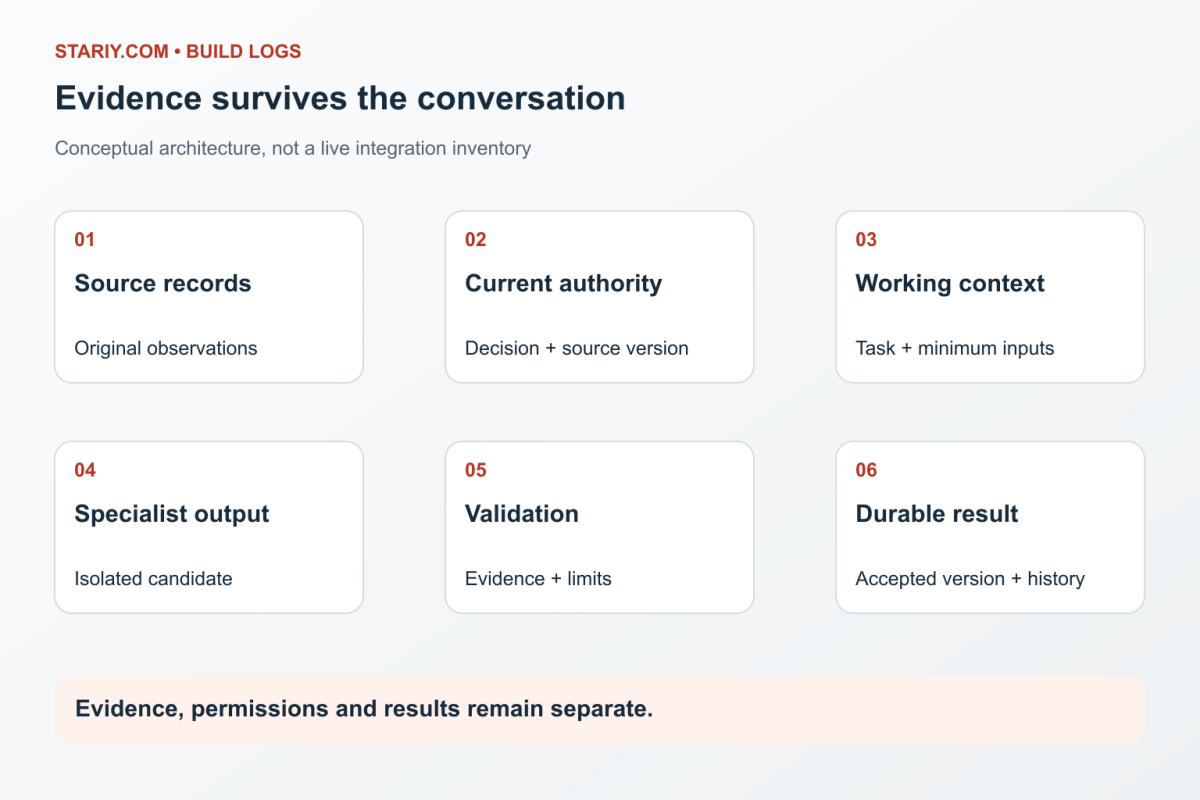
When I ask an AI assistant a question about a project, I do not want it to start from an empty conversation. I want it to find what is already known, check which version is authoritative, understand the current objective and leave a result that can be verified and reused.
That is the purpose of my AI OS. It is an organized working environment for knowledge, analytical workflows, specialized workspaces and controlled execution. It is not a replacement for Windows or Linux, a single chatbot, or a claim that software independently runs all my projects.
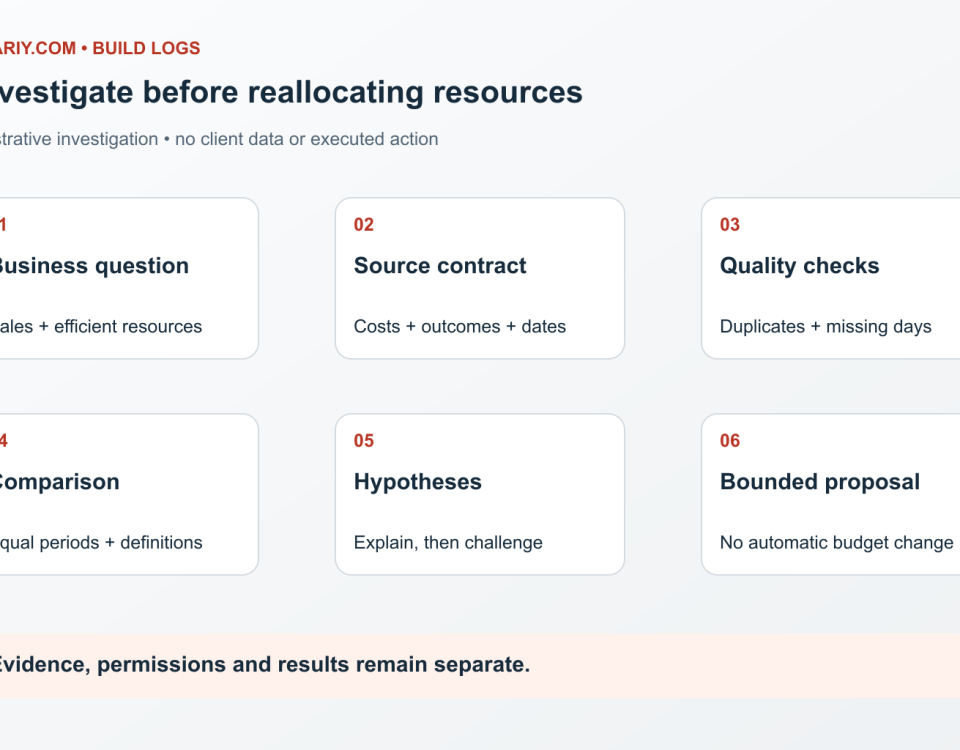
The practical objective is business performance: better decisions about sales, qualified leads, costs and scarce human attention. A dashboard is one output. The more important system is the evidence and process behind that output.
Persistent knowledge rather than conversation memory
A useful conversation can contain an important decision, a source link, a correction and a failed experiment. If those remain only in chat history, the next task may repeat the research or act on an obsolete answer.
My single source of truth, or SSOT, keeps durable project knowledge outside any one model’s conversation. It includes approved decisions, source registers, retained evidence, reusable methods, working documents and execution records. Historical versions remain available; a current pointer identifies the version that should control the next decision.
This does not mean every file is equally trustworthy. A draft proposal, an Owner-approved decision, a source observation and a verified implementation have different authority. The system must preserve those distinctions instead of treating the newest-looking filename as the truth.
The first step is therefore to resolve existing knowledge. Collect or recalculate only a missing, stale or decision-critical delta. If evidence conflicts, keep the conflict and explain which source governs that particular claim.
Build history at the grain the source supports
Daily marketing observations allow comparisons across days, weeks and matching periods in different years. Event-level records can support a customer journey. Monthly measurements retain their monthly grain. A monthly total cannot establish what happened on every individual day.
Useful coverage is described by the earliest and latest verified observations, covered intervals, gaps and metric definitions. I do not equate storage size with analytical completeness. Overlapping exports and retries do not create extra customers or extra history.
The evidence chain separates original snapshots from normalization, reconciled business entities, accepted analytical views and final deliverables. A chart should be traceable back through that chain. When a refresh fails validation, the prior accepted layer remains available with its real observation cutoff.
Give workspaces a clear responsibility
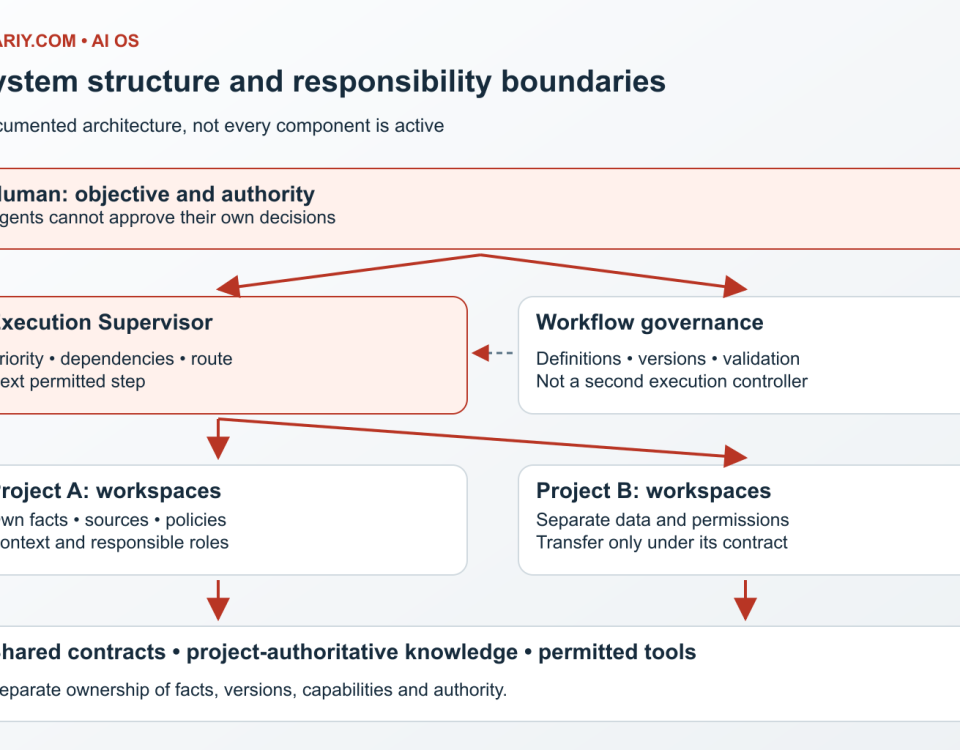
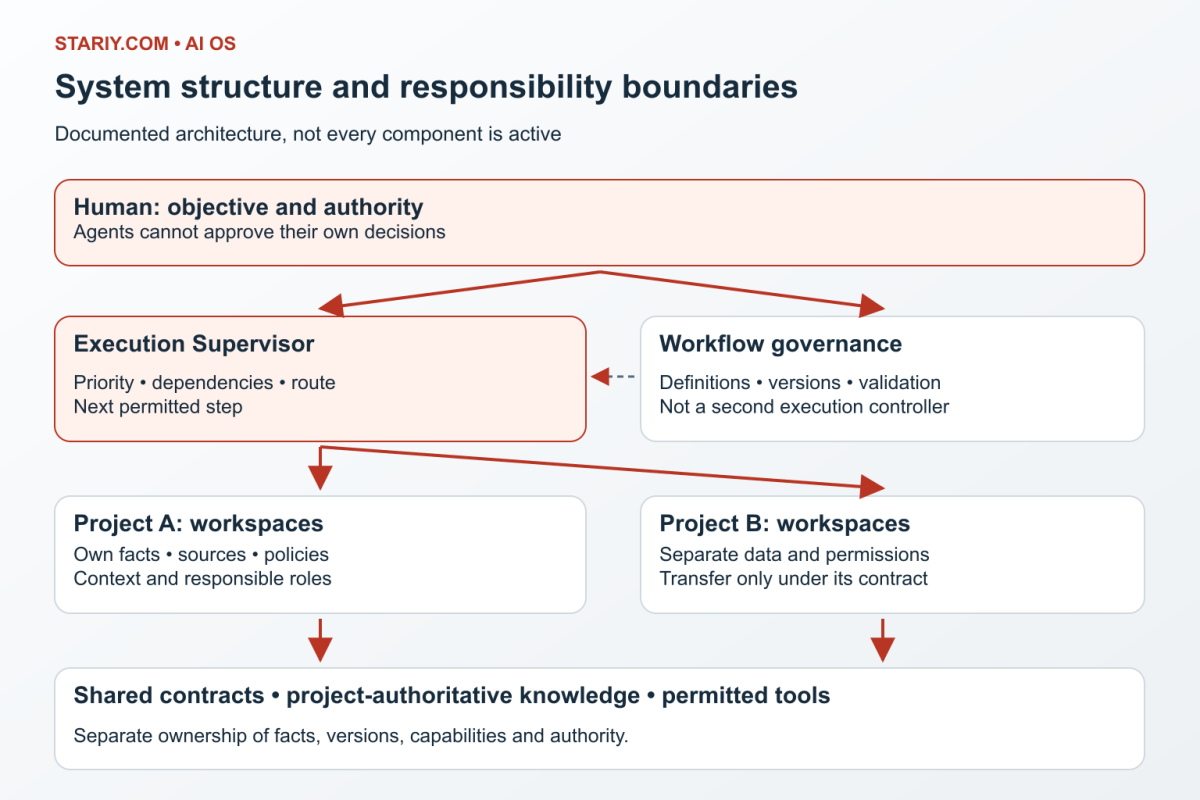
One workspace may maintain source collection. Another owns metric definitions. A specialist can prepare an article, a localized version, a visual or a technical change. A reviewer checks the relevant result. The coordinator retains priorities, dependencies and decisions rather than every intermediate detail.
A handoff needs more than “continue.” It identifies the objective, inputs and revisions, approved scope, permitted changes, unresolved questions, acceptance checks and return destination. Sending that package is a delivery event; it is not proof that the destination has completed its work.
The same principle applies to a website. Editorial preparation, native CMS implementation and independent affected-page review are different responsibilities. A prepared article is not a published article. A successful staging change is not a production release.
Use agents for bounded work
Agents can retrieve evidence, normalize records, check a schema, calculate comparisons or produce a candidate explanation. Their value comes from a well-defined job and inspectable output, not from the number of agents involved.
For a small question, one capable assistant may be enough. Additional roles are useful when they provide a genuinely different check or own a separate task boundary. They should share references to accepted evidence, not create divergent copies of the business rules.
Model providers are execution clients, not the owners of the knowledge base. That is the architectural direction. It does not imply that every provider adapter, restore procedure or cross-machine concurrency mode has already passed operational acceptance.
Separate a finding from permission to act
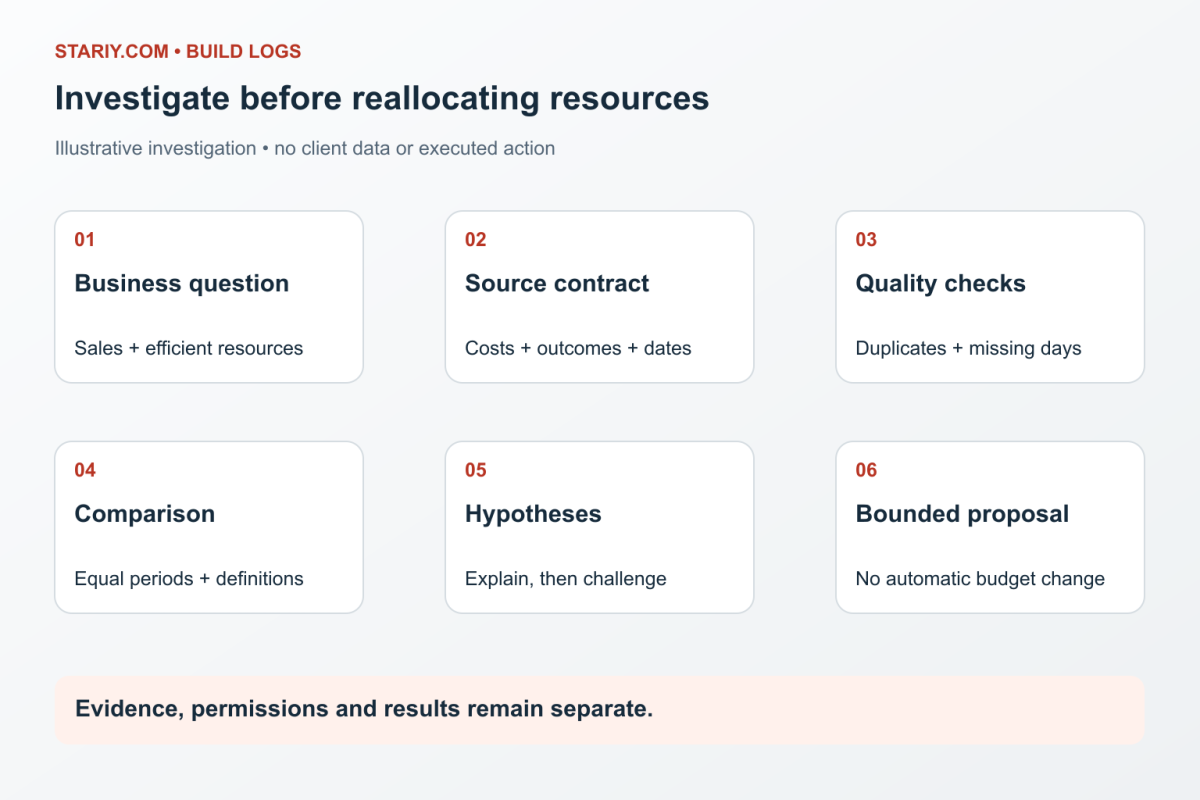
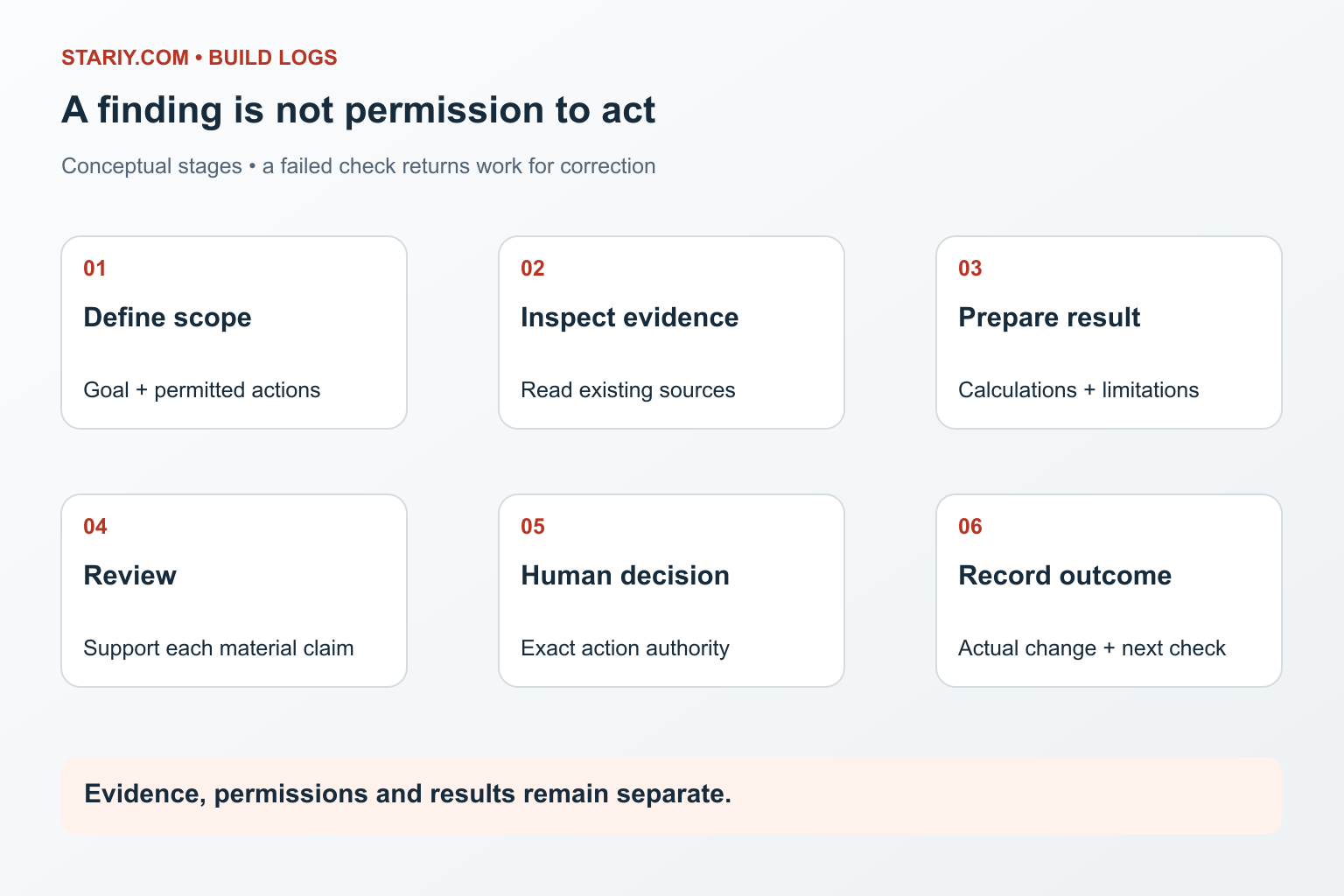
An agent may discover that a channel’s lead quality has deteriorated. That does not give it authority to change the advertising budget. Read-only analysis, candidate preparation, approval and execution are separate stages.
I define the business objective and remain responsible for accepting material decisions. Relevant people retain their domain responsibilities. Source access, publishing and consequential business changes follow their own permissions; an internal handoff does not expand those permissions.
Shared records also need an accountable writer. Several readers can inspect evidence or prepare isolated candidates. They should not overwrite the same authoritative file or CMS record concurrently. Before publishing a change, the writer checks that its source revision has not drifted.
Make uncertainty part of the result
A useful answer distinguishes a verified observation, a calculation, a hypothesis and an unknown. More confident wording does not repair a missing source.
Attribution is a practical example. A tracked customer path can support a documented acquisition relationship, but it does not automatically prove an incremental sale. A dashboard can be available online while individual sources are delayed, provisional or manually refreshed. Those limits belong beside the decision they affect.
Failure records are also reusable knowledge. A correction should retain what went wrong, how it was detected, what changed and which future check prevents repetition. The purpose is not a perfect-looking history; it is less repeated work and fewer repeated mistakes.
Describe implementation honestly
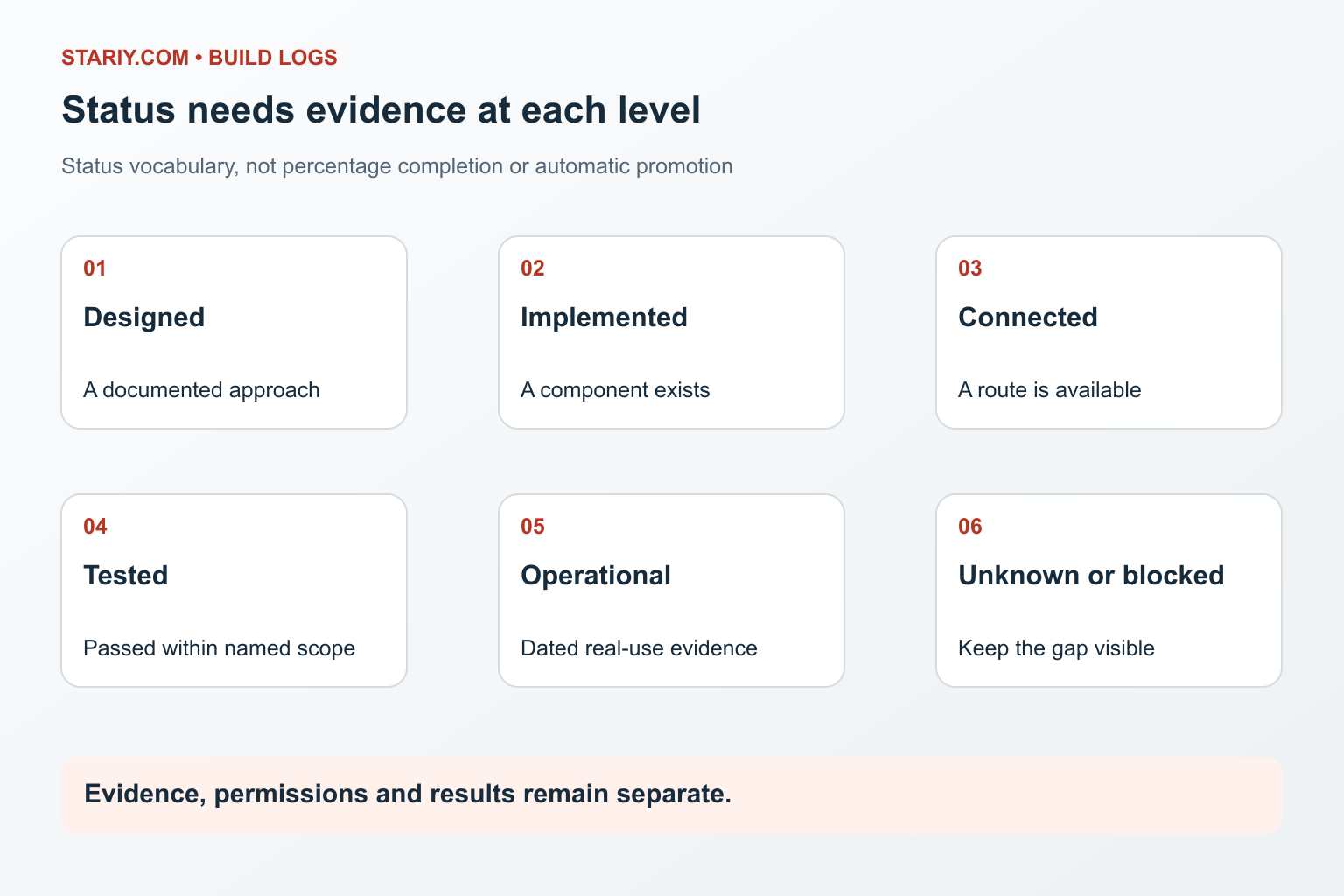
Some parts of this approach are already used in everyday project work: durable records, project-scoped rules, source references, bounded handoffs and retained verification evidence. Some integrations and analytical views are operational but continue to improve. Other capabilities remain designed, locally tested, conditional or blocked.
These states are not interchangeable. A successful test on a synthetic fixture does not prove production readiness. A connected source does not prove complete historical coverage. A hosted view does not prove unattended collection. A governance policy does not by itself deploy its runtime.
What the system should leave behind
After a useful task, there should be more than an answer. There should be a clear conclusion, evidence and its period, a reproducible calculation where relevant, declared limitations, the next safe action and a durable result.
The website workflow provides one example: an accepted bilingual source package moves to a separate CMS writer, then to affected-page verification before the resulting URLs are reported. The News Radar provides another: finding a headline creates a source-review candidate, not an automatic publication.
Neither example requires exposing private workspaces, clients or credentials. The public explanation can show the logic while keeping operational access and confidential evidence private.
For me, AI OS is a way to make knowledge cumulative and work inspectable. The test is whether it helps a real decision, preserves the evidence and respects the boundary between understanding a situation and changing it.